
All-in-One Solar Energy Storage Systems
One line: Inverter, MPPT, LiFePO4 battery and BMS in one enclosure — from a 300 W portable unit to a 16 kWh outdoor wall unit.
Model range
| Model | Rated AC output | Battery capacity | System voltage | Protection | Net weight |
|---|---|---|---|---|---|
| L2-N1-300 | 300 W | 3.2 V cell | — | — | 7.7 kg |
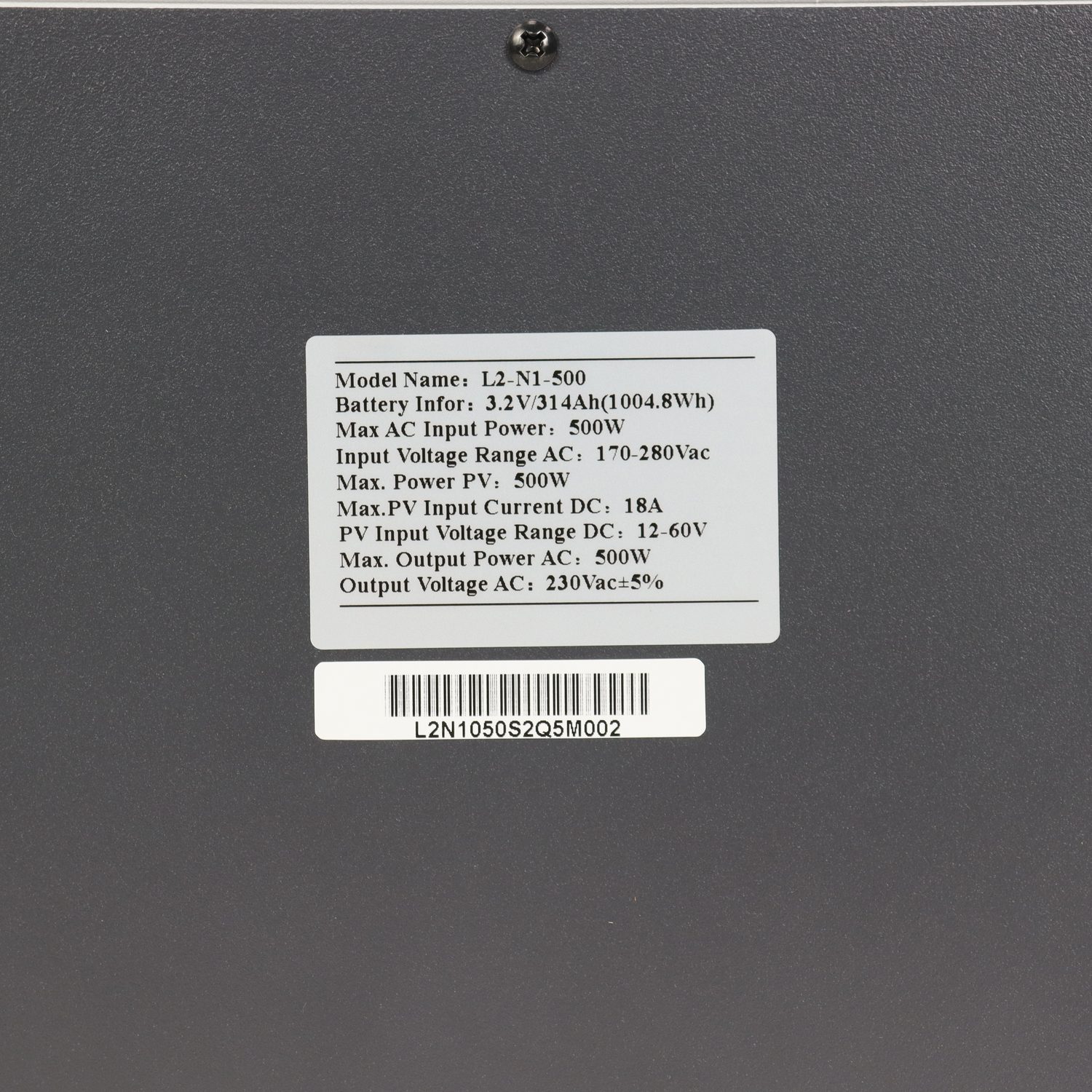
| L2-N1T-500 | 500 W | 1004.8 Wh (≈1 kWh) | 3.2 V cell | — | 10.11 kg |
| L2-N2T-1200 | 1200 W | 2000 Wh (2 kWh) | 6.4 V cell | — | 17.48 kg |
| H3-W2-4200 | 3600 W | 2.56 kWh | 25.6 V | IP54 (outdoor) | 31.7 kg |
| H3-W8-6500 | 5000 W | 8 kWh | 25.6 V | IP54 (outdoor) | 89.4 kg |
| H3-W16-7200 | 6500 W | 16 kWh | 51.2 V | IP54 (outdoor) | 133.4 kg |
| H4-N8-4200 | 3600 W | 8 modules | 25.6 V | IP21 (indoor) | 67.7 kg |
Model letters matter.W= outdoor (IP54),N= indoor (IP21). The number after the letter is the battery module count. The final number is the platform rating, not necessarily the AC output — see the model number decoder.
Portable units — L2 series
| L2-N1-300 | L2-N1T-500 | L2-N2T-1200 | |
|---|---|---|---|
| Rated AC output | 300 W | 500 W | 1200 W |
| Battery capacity | — | 1004.8 Wh | 2000 Wh |
| Max PV input | 200 W | 500 W | 600 W |
| PV input range | 12–60 Vdc | 12–60 Vdc | 15–55 Vdc |
| AC output | 230 Vac, pure sine | 230 Vac, pure sine | 230 Vac, pure sine |
| Net weight | 7.7 kg | 10.11 kg | 17.48 kg |
The L2 series uses a single-cell design — one large cell rather than many small ones — which removes cell-imbalance problems and improves reliability. Charge cycle life is rated at ≥6000 cycles, giving a service life of 10 years or more in typical use.
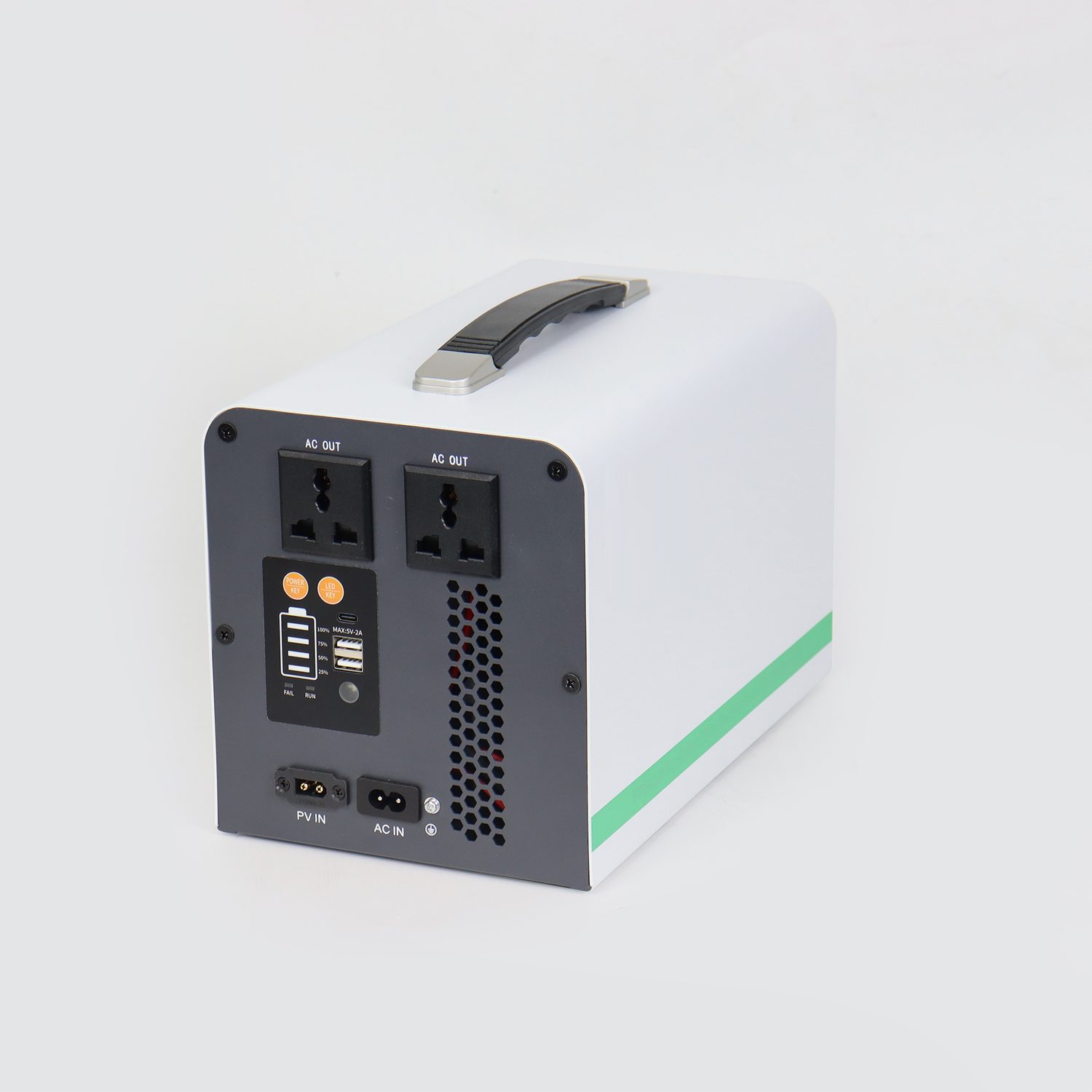
Interfaces on the L2-N1-300: 220 V AC output, lighting lamp with its own control, AC output control, Type-C 5 V output, USB-A 5 V output, charge/status indicator, PV input and utility input. The dual USB ports run two devices at once.
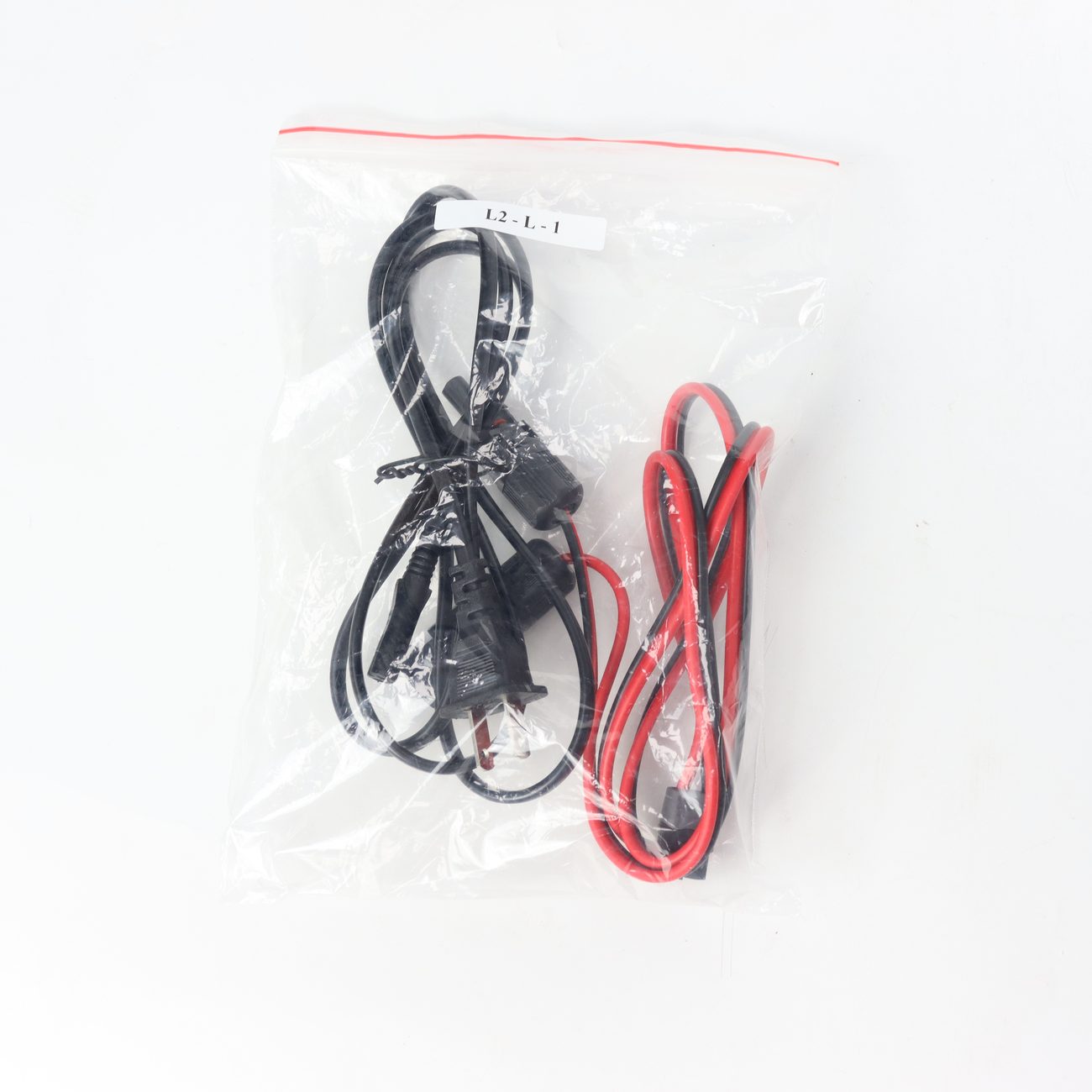
PV input accepts up to 60 V, so the units work with the vast majority of standard solar panels. Both PV and utility charging are supported.
Operation: hold POWER/KEY for over 2 seconds to switch on; press for over 1 second to switch off. The charge indicator flashes while charging; below 1% charge the red light flashes for 10 seconds then the system shuts down; a solid red light means output fault protection — restart to reset.
Wall-mount units — H3 and H4 series
H3-W2-4200 — 2.56 kWh, outdoor
| Item | Value |
|---|---|
| Battery | 8 × 3.2 V 100 Ah modules, 25.6 V nominal, LiFePO4 |
| Rated AC output | 3600 W (surge 7200 W) |
| Max PV input | 5000 W, MPPT 40–450 Vdc, 500 Voc max |
| AC input | 220 Vac nominal, 90–280 Vac range |
| Transfer time | 20 ms |
| Enclosure | 460 × 635 × 160 mm · IP54 · 31.7 kg |
H3-W8-6500 — 8 kWh, outdoor
| Item | Value |
|---|---|
| Battery | 8 × 3.2 V 314 Ah modules, 25.6 V nominal, LiFePO4 |
| Rated AC output | 5000 W (surge 10000 W) |
| Max PV input | 9000 W (4 kW charge + 5 kW invert) |
| Max PV charge current | 160 A |
| Transfer time | 20 ms |
| Enclosure | 500 × 330 × 836 mm · IP54 · 89.4 kg |
H3-W16-7200 — 16 kWh, outdoor
| Item | Value |
|---|---|
| Battery | 16 × 3.2 V 314 Ah modules, 51.2 V nominal, LiFePO4 |
| Rated AC output | 6500 W (surge 13000 W) |
| Max PV input | 9000 W, MPPT 60–450 Vdc |
| AC input | 220 Vac nominal, 90–280 Vac, 40 A max bypass |
| Transfer time | 20 ms |
| Enclosure | 490 × 345 × 910 mm · IP54 · 133.4 kg |
H4-N8-4200 — indoor
The indoor counterpart to the H3 line, rated IP21 for installation inside a plant room or utility area.
| Item | Value |
|---|---|
| Battery | 8 × 3.2 V 314 Ah modules, 25.6 V nominal, LiFePO4 |
| Rated AC output | 3600 W (surge 7200 W) |
| Max PV input | 5000 W, MPPT 40–450 Vdc |
| Max utility charge current | 100 A |
| Enclosure | 400 × 250 × 656 mm · IP21 · 67.7 kg |
Applications for the H4-N8-4200 include backup power, RV supply, home energy storage, and telecom base stations or data centres.
Common features across the ESS line
- LiFePO4 chemistry — thermally stable, decomposition temperature above 500 °C, and the square aluminium-shell cells pass overcharge, over-discharge, external short-circuit, crush and drop testing to GB/T 36276-2018.
- BMS with voltage and temperature monitoring — protects against overcharge, over-discharge and over-temperature, and raises cell utilisation.
- Cycle life ≥6000 at 25 °C, 0.5C, 80% depth of discharge, to 80% capacity retention.
- Self-discharge ≤3% per month at 25 °C.
- Automatic source switching — PV, utility and battery switch automatically for continuous supply.
- Wi-Fi monitoring — generation data and status on the app.
Choosing between them
The wall units share one control platform but differ in energy, output and installation class:
| Model | Energy | Rated output | Surge | Battery platform | Mounting |
|---|---|---|---|---|---|
| H3-W2-4200 | 2.56 kWh | 3600 W | 7200 W | 25.6 V | Outdoor wall |
| H3-W8-6500 | 8 kWh | 5000 W | 10,000 W | 25.6 V | Outdoor wall |
| H3-W16-7200 | 16 kWh | 6500 W | 13,000 W | 51.2 V | Outdoor wall |
| H4-N8-4200 | 8 kWh | 3600 W | — | 25.6 V | Indoor, IP21 |
| L2-N2T-1200 | 2 kWh | 1200 W | — | Portable | Carry |
The short version of the choice:
- Portable backup, camping, small tools — L2-N1T-500 or L2-N2T-1200.
- Fixed backup for a few hours of evening load — H3-W2-4200.
- Most of a day of autonomy for a home or small business — H3-W8-6500.
- Extended autonomy or a larger load — H3-W16-7200.
- The unit has to go indoors — H4-N8-4200.
Installation class is part of the specification, not a preference. IP21 is protected against fingers and dripping water, not against rain — that is why the H4 is the indoor model and the H3 units are outdoor wall units.
Sizing guidance — matching energy capacity to daily consumption — is in the sizing guide.
Note on certification and shipping
The all-in-one ESS and battery models currently hold no certification files, and no UN38.3 report is held. Because these units contain lithium cells, UN38.3 is required for transport booking. We will confirm transport options and documentation status at quotation rather than assume.
Related pages
- Solar battery packs
- Hybrid inverters
- Certifications
- OEM / ODM — supplying these models under your own brand