
OEM / ODM — Supply Under Your Own Brand
One line: Standard models, your brand — on the chassis, the rating label, the carton and the manual. We are the supplier and exporter on the contract; the certificate holder named on each document is the entity that produced the unit.
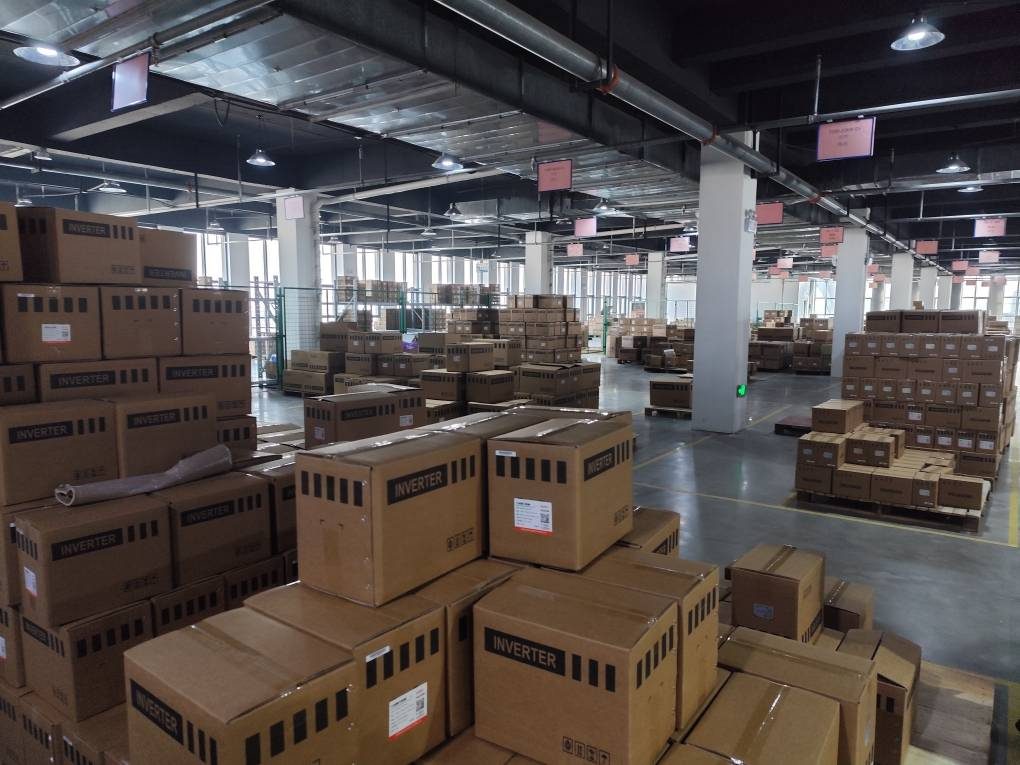
What "OEM" and "ODM" mean here
OEM is a model we already supply, carrying your brand mark, your rating label, your carton and your manual. Nothing about the electrical product changes — what changes is what the buyer sees and what is printed on the box.
ODM is a configuration adapted for your market: a different battery capacity on an ESS model, a different AC output arrangement where the model supports it, a different display language, or your own model naming and SKU.
Both start from a model that already exists and is already documented. Neither is a blank-sheet design project — see the limits set out below.
What can be customised
| Element | Standard supply | Options for your order | What it affects |
|---|---|---|---|
| Brand mark on chassis | Grenkago, or left blank | Your logo, printed or on a label | Artwork and plate setup |
| Rating label / nameplate | Supplied model number and ratings | Your brand, your SKU, your importer details | Label artwork and your written approval |
| Packaging | Neutral export carton | Printed carton, branded inserts, your barcode | Carton minimum and lead time |
| Manual and documents | English | French, Spanish, Portuguese, Russian, Arabic — others on request | Translation and proofing |
| Model naming | Supplied model number | Your own SKU or a private code | Agreed at quotation |
| AC output arrangement | As per model | Socket type or terminal layout where the model supports it | Confirm per model |
| Battery capacity (ESS models) | Standard packs | Alternative kWh within the model family | Confirm per model |
| Warranty route | Through us | Through you, with our back-to-back support | Stated in the contract |
Every element is confirmed in writing before production starts. If something on this list cannot be done for a particular model, we say so at quotation rather than after the deposit.
What we do not do
- No new inverter design. A new topology, a new power stage or a new enclosure is a development project with its own tooling, certification and lead time — we do not take those on.
- No new certificate in your name. Re-labelling is not certification. The section below explains what a private label does and does not do to the paperwork.
- No third-party brand marks. We do not print a trademark unless you can show you are entitled to use it.
Who makes it — and what a buyer can check
- OEM and ODM orders run on our production partner's lines. The partner is the certificate holder named on the certification documents; we are the exporter and the contracting party.
- The line can be visited. It is 30 minutes' drive from our office, so buyer audits and third-party inspections can normally be arranged at short notice — including, if you want one, a pre-production check on your first label run.
- Your brand goes on the product; the partner's name stays on the certificate. That is the honest version of private label: the conformity of the unit rests on the model as documented, and re-labelling does not move it to a different manufacturer.
- The sign at the partner's gate reads "Grenkago Authorised Export Partner", not "factory". If a buyer asks why, the answer is that the factory belongs to someone else and we do not pretend otherwise. It also means the model list, the documents and the price come from one place instead of three.
Quantity, setup and lead time
| Change | Typical minimum | One-off cost | Added lead time |
|---|---|---|---|
| Logo on chassis + rating label | One pallet, or negotiated | Label or plate setup | 5–10 days |
| Printed carton and inserts | Container or mixed order | Plate and die setup | 10–15 days |
| Manual in a second language | Same as above | Translation and proofing | 7–12 days |
| Non-standard output arrangement | Confirm per model | None to modest | Confirm at quotation |
These are indicative. Minimum quantities, setup costs and lead times are quoted per item and per model, because a label change on a stock model and a new carton run behave very differently.
How an OEM / ODM order runs
- Model and SKU list — which models, which quantities, which destination market.
- Artwork and configuration freeze — logo files, label layout, carton drawing, manual language. Everything is fixed on paper before anything is produced.
- Proof and pre-production sample — a printed label proof and photographs of the first unit, so you approve what will actually be printed.
- Your written approval — production does not start before this.
- Production, testing and inspection — arranged by us, with test photographs on request.
- Packing to your artwork, then documents and shipping — export documents and freight arranged end to end.
Certifications under a private label
This is the part most buyers ask about, so it is worth stating plainly.
- Certification documents are held for the model ranges we supply. Each file is quoted together with the model range and the certificate holder named on it — we do not describe a file as covering a model it does not cover.
- Applying your brand to a model does not create a new certificate, and it does not change the conformity of the model as supplied. The unit is still the unit that the document covers.
- If your market requires a certificate, a listing or a registration in your own company's name — a new FCC ID, a national mark, an in-country registration — that is a separate project with its own cost, testing and lead time. Tell us at enquiry stage; we will say whether it is feasible rather than promising it.
- Battery and all-in-one ESS models are currently quoted without UN38.3 test reports. This restricts air and sea transport for lithium battery products, whether or not your brand is on the unit. Ask before you plan logistics.
Full detail, including the files we do not hold, is on the certifications page.
Artwork, trademarks and liability
- You supply print-ready artwork, and you confirm you are entitled to use the marks on it. We do not verify trademark ownership — we rely on your confirmation.
- We do not put a third-party mark on a unit, and we do not reproduce a mark that a buyer cannot show a right to use.
- Label proofs are approved by you in writing before production, and we can send a photograph of the first unit off the line.
- Once your mark is applied, exporting that unit into a market where the mark is already registered is a risk you manage — we flag it here so it is not a surprise later.
Documents that ship with an OEM order
- Model-specific specification sheet, under your model name if you use one
- Installation and wiring guide in the agreed language
- Parameter-setting guide and fault-code reference
- Certification files covering the shipped model range
- Packing list matching your carton markings and SKU
Next step
Send four things and you get a written answer on all of them: the model list, the destination market, which elements you want branded, and the expected volumes. You will get back feasibility per element, minimum quantities, one-off setup costs, added lead time, and the certification position for each model.
Request a quotation · Certifications · Service and warranty commitment · Hybrid inverter range