
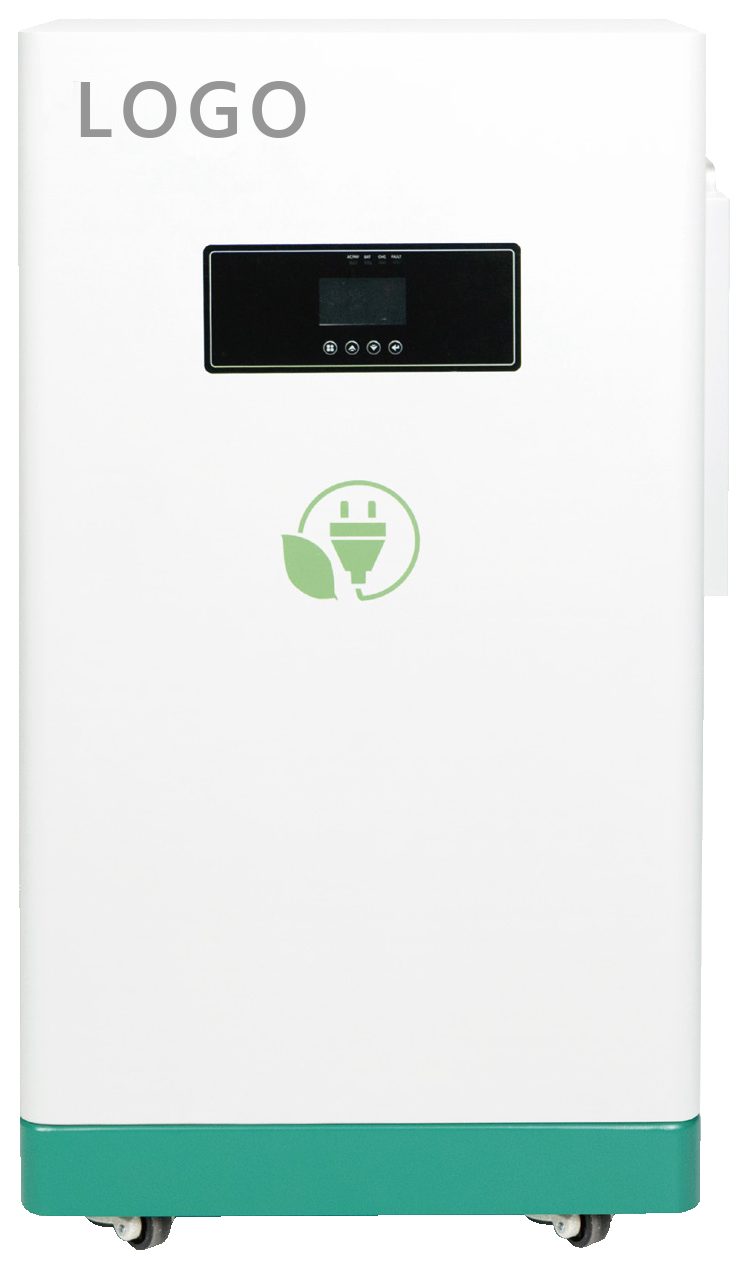
H3-W8-6500 — 8 kWh All-in-One Energy Storage, Outdoor
One line: Inverter, MPPT, 8 kWh LiFePO4 battery and BMS in one IP54 enclosure — install it, connect PV and grid, and it manages the rest.
Specifications — battery
| Item | Value |
|---|---|
| Cell | 3.2 V 314 Ah |
| Module count | 8 pcs |
| Nominal voltage | 25.6 V |
| Working voltage | 22–29.2 V |
| Standard charge/discharge | 0.5C |
| Communication | RS485 / CAN |
| Installation | Integrated (all-in-one) |
| Battery type | LiFePO4 |
| Max charge current | 160 A |
| Battery voltage range | 22–29.2 V |
Specifications — PV input
| Item | Value |
|---|---|
| Max PV open-circuit voltage | 500 Voc |
| MPPT voltage range | 60–450 Vdc |
| Max PV input power | 9000 W (4 kW charging + 5 kW inverting) |
| Max PV charge current | 160 A |
| Peak efficiency | 98% |
Specifications — AC output
| Item | Value |
|---|---|
| Output waveform | Pure sine wave |
| Nominal voltage | 208 / 220 / 230 / 240 Vac (±5%) |
| Rated output power | 5000 W |
| Surge power | 10000 W |
| Transfer time | 20 ms |
| Output frequency | 50 / 60 Hz (auto-sensing) |
Specifications — AC input
| Item | Value |
|---|---|
| Max utility charge current | 160 A |
| Rated input voltage | 220 Vac |
| Input voltage range | 90–280 Vac |
| Frequency | 50 / 60 Hz (auto-sensing) |
Specifications — general
| Item | Value |
|---|---|
| Dimensions | 500 × 330 × 836 mm |
| Net weight | 89.4 kg |
| Packing dimensions | 900 × 560 × 480 mm |
| Gross weight | 106 kg |
| Protection rating | IP54 (outdoor) |
Why all-in-one
A conventional system needs an inverter, a separate battery bank, a battery enclosure, interconnecting DC cabling and a BMS. An all-in-one replaces all of that with a single enclosure:
- No separate battery bank to house. The cells sit inside the unit.
- No field DC wiring between inverter and battery. Fewer connection points, fewer failure modes, less risk of a wrong-voltage connection damaging the unit.
- Matched components. The MPPT, inverter and BMS are designed together rather than assembled from different suppliers.
The trade-off is serviceability: an internal battery cannot be swapped as quickly as an external pack. For residential and small commercial installations, the trade is usually worth it.
Sizing context
8 kWh of storage with a 5000 W output is a balanced residential specification. For a home consuming around 8–10 kWh per day, this gives most of a day of autonomy at 80% depth of discharge. The 9000 W PV input lets the array both serve the load and recharge the battery.
The 10000 W surge rating covers motor starts — a well pump or compressor cycles on without tripping the unit. Transfer time of 20 ms keeps computers and sensitive equipment running through a mains failure.
Installation: at 89.4 kg the unit needs two people and a suitable wall or floor mounting. IP54 means it can go outdoors, but the operating environment — ventilation and ambient temperature — still matters.
Protection and safety
- LiFePO4 chemistry — decomposition temperature above 500 °C.
- Square aluminium-shell cells tested to GB/T 36276-2018 for overcharge, over-discharge, external short circuit, crush and drop.
- BMS monitoring cell voltage and temperature against overcharge, over-discharge and over-temperature.
- Cycles ≥6000 at 25 °C, 0.5C, 80% depth of discharge, to 80% capacity retention.
- Self-discharge ≤3% per month at 25 °C.
Connections, monitoring and accessories
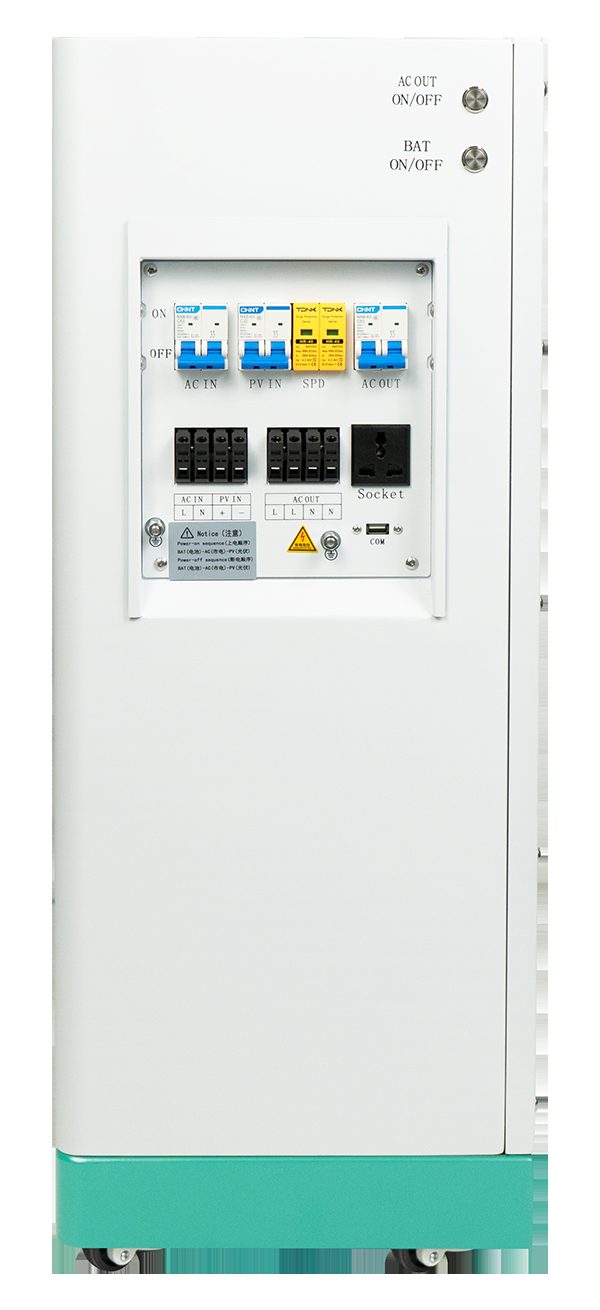
Terminal layout, system wiring, monitoring options and the accessories supplied with the unit.
Certification and transport
| Certification | Status |
|---|---|
| CE / FCC / RoHS | Not held |
| UN38.3 | Not held |
This model holds no certification files, and no UN38.3 report. As it contains lithium cells, UN38.3 is required for air and sea transport booking, so shipping is currently restricted. We state this before ordering rather than after — see the certifications page.
Not the right choice when
- Daily consumption stays under about 3 kWh. You would be paying for capacity that never cycles — the H3-W2-4200 covers that load.
- You need more than one night of autonomy at 8–10 kWh per day. Two nights needs roughly 20 kWh; step up to the H3-W16-7200.
- The installation has to be indoors. At 89.4 kg this is a two-person outdoor wall unit; the indoor alternative is the H4-N8-4200.
Related models
- Larger capacity: H3-W16-7200 — 16 kWh, 6500 W
- Smaller capacity: H3-W2-4200 — 2.56 kWh, 3600 W
- Indoor version: H4-N8-4200 — IP21
- Full energy storage range