
Why South African Homes Keep Adding Battery Storage in 2026
One line: South Africa kept installing home batteries after load-shedding eased because the reason to buy moved from "the grid is off" to "the grid is expensive and unpredictable." The household that already owns panels is now the largest buyer, and for that buyer the battery is the part of the system that was missing.
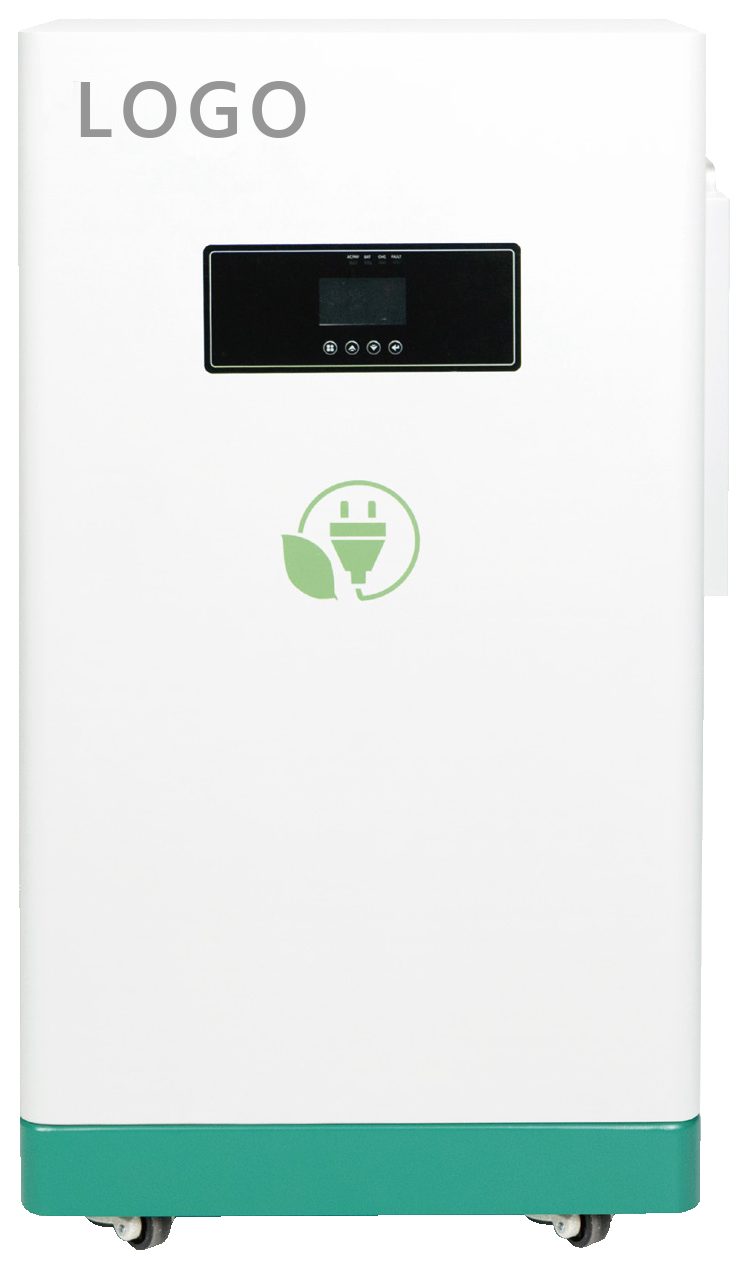
South Africa accounts for 35-40% of residential storage demand across the African region, and the regional market is forecast to move from USD 1.2-1.6 billion in 2026 to USD 5.5-7.5 billion by 2035, a compound annual growth rate of 16-20% (source: IndexBox, 2026; Boin Group industry round-up, 2026). That growth is being recorded in a period when load-shedding has eased rather than worsened, which is the part of the story most buyers get wrong. The thesis of this article is simple: the outage was never the whole reason, and once it receded the rest of the reasons were still standing.
Grenkago is a supplier and exporter of solar inverters and LiFePO4 energy-storage systems based in China. We are not a manufacturer, and we make no claim about production facilities. What we can do here is separate the four forces that keep South African storage demand rising, and set out what a buyer should check before spending on a battery.
What actually changed after load-shedding eased
Load-shedding was the visible symptom, and it is the one that made storage a household word. But the underlying condition is the shape of the supply: a grid that is old, constrained by generation availability, and subject to municipal distribution failures that have nothing to do with national generation at all. A neighbourhood can lose supply for a day because a substation failed, in a week when the national picture looks calm.
That is the first reason demand did not fall away. A battery bought for a national outage schedule still does its job for a local fault, and local faults did not go away.
Reason 1 — The tariff did not ease with the outages
Electricity tariffs in South Africa have been rising faster than general inflation for years, and the trend has not reversed. Once a household pays a rate that makes its own rooftop generation cheaper than the grid, the question stops being "how do I survive an outage" and becomes "how much of my own generation can I actually use."
Without storage, a solar array exports its best production to the grid in the middle of the day and the household buys power back in the evening, at the most expensive hours, for lighting, cooking, refrigeration and television. A battery moves that generation a few hours later. That is a tariff-driven purchase, and easing load-shedding does nothing to it.
Reason 2 — The panels are already on the roof
The second force is the installed base. A large number of South African homes installed solar during the load-shedding years, and a great many of them installed panels with only enough inverter and no battery, or with a battery sized for a few hours of cover.
Those households are now the core battery buyer. They already have the expensive part of the system on the roof and the mounting, wiring and Certificate of Compliance work done. Adding storage to that installation has a much shorter payback than building the whole system from nothing, because the buyer is only paying for the missing component rather than for the array, the roof work and the commissioning.
There is one technical condition attached: the existing inverter has to be able to work with a battery. A grid-tie inverter cannot form a supply on its own, so a battery bolted onto one gives no backup at all. Where the existing unit is hybrid, or where replacing it is economical, the retrofit works. Where it is not, the honest answer is that the inverter is the part to change.
Reason 3 — Grid uncertainty changed shape, it did not end
South African households have learned to treat grid supply as a variable rather than a constant. That expectation is now built into how people buy equipment, and it does not reset when the national picture improves for a season.
The practical consequence is that resilience has become a normal specification line rather than an emergency purchase. A buyer comparing two inverters now asks what the transfer time is, whether the unit can run without a battery, and whether critical and non-critical loads can be separated. Those are questions that come from experience, not from a headline.
Reason 4 — Cost per cycle keeps falling
The chemistry shift did the rest. Lithium iron phosphate now accounts for close to 90% of global battery storage deployment (source: IEA, 2025), and the reason is arithmetic rather than fashion: a LiFePO4 bank cycling daily is bought once for a decade, while a deep-cycle lead-acid bank in the same duty needs two to four replacement banks plus regular watering and terminal service.
For a household that cycles a bank every day, that difference is the single largest line in the ten-year cost. We set out the full comparison, including the cases where lead-acid still wins, in our LiFePO4 vs lead-acid total cost of ownership guide.
Battery-only or hybrid platform?
This is the decision that determines whether the money is spent once or twice. The table compares the two paths for a household that already has solar panels.
| Battery added to an existing grid-tie inverter | Hybrid inverter plus battery | |
|---|---|---|
| Backup during a grid failure | none - a grid-tie unit cannot form a supply | full, automatic, about 20 ms transfer |
| Use of own generation after sunset | no change | daytime surplus carried into the evening peak |
| Load separation | not available | main and secondary output, non-critical loads dropped first |
| Runs before the battery is bought | yes | yes - our hybrid models run on PV and grid alone |
| Grows later | replace the inverter to grow | more battery modules, or paralleled units |
| Best suited to | a household on a flat tariff with reliable supply | a household on a rising tariff with any grid uncertainty |
For most South African buyers in 2026 the second column is the one that matches the reason they are buying. See the all-in-one energy storage range and the hybrid inverter range for the hardware behind it.
Sizing a South African home
All figures from manufacturer specification sheets. Sizing method: total the loads that must run at the same time, then multiply the overnight hours by that figure to get the usable kWh you need. The sizing guide walks through the arithmetic with worked examples.
| Home profile | Overnight loads in play | Suggested capacity | Example model |
|---|---|---|---|
| Flat or townhouse, essentials only | Lights, fridge, internet, TV | 2-3 kWh | H3-W2-4200 (2.56 kWh, outdoor) |
| Family home, most of a night | Above plus freezer, fans, gates and alarms | 5-10 kWh | H3-W8-6500 (8 kWh, outdoor) |
| Home with geyser or AC on backup | Above plus a heavy cycling load | 10-16 kWh | H3-W16-7200 (16 kWh, outdoor) |
| Indoor plant room or utility area | As above, mounted inside | 5-10 kWh | H4-N8-4200 (indoor, IP21) |
Note the letter in the model code: W marks an outdoor IP54 enclosure, N marks an indoor IP21 one. Fitting the indoor version where an outdoor rating is required is one of the most common specification mistakes in this market. The model number decoder explains the rest of the naming logic.
What a South African buyer should check before ordering
- Inverter type, first. Hybrid, not grid-tie. If the existing inverter cannot take a battery, that is the component to replace, not the battery to blame.
- Battery voltage and BMS protocol. Our all-in-one units run at 25.6 V or 51.2 V depending on the model; separate battery packs are 51.2 V. Send the battery or inverter model and we confirm the protocol pairing in writing before you order.
- Enclosure rating against the site. Outdoor, shaded, wall-mounted under an eave is a different specification from a coastal installation or an unventilated garage.
- Load separation. Decide which circuits survive a long outage and which are dropped first. A geyser left on the backup circuit will empty a battery that would otherwise have carried the house to morning.
- Transport and documentation position. No UN38.3 test report is held at present for our battery and all-in-one models, and UN38.3 is required for air and sea transport of lithium batteries. Confirm the shipping position with us before planning an order rather than after.
- Certification coverage by model. We hold CE, FCC SDoC, GB 4943.1-2022 and RoHS files, and each covers the model ranges listed on it. We do not hold ISO 9001, UL or grid-tie certification, and we say so rather than imply otherwise. See the certifications page for the numbers and covered ranges.
Brands commonly evaluated in South Africa
South African buyers typically shortlist from a familiar set of names, and the comparison is worth doing. What decides the outcome, though, is not the label on the enclosure but a short list of numbers, ratings and documents that can be checked on each specification sheet.
| Check on the specification sheet | What to confirm |
|---|---|
| Inverter type | Hybrid, able to form a supply without the grid |
| Storage capacity and chemistry | Usable kWh at the stated depth of discharge, and cycle rating with its test conditions |
| Enclosure rating | IP54 for outdoor mounting, IP21 for indoor, as a separate SKU rather than an assumption |
| Load separation | Whether critical and non-critical outputs can be separated |
| Documentation | Which certification files exist, for which model ranges, and which are not held |
Two points about where we sit in that comparison:
- Grenkago is a China-based supplier and exporter, not a manufacturer. Our all-in-one range runs from a 300 W portable unit to a 16 kWh outdoor wall unit, using LiFePO4 cells rated at 6000 cycles or more to 80% capacity at 25 degrees Celsius, 0.5C and 80% depth of discharge, with BMS monitoring of cell voltage and temperature.
- We hold no ranking and make no claim about any other brand's performance, reliability, price or service, and we have not tested their equipment. Where this article states something about our own products, it is a specification we can document.
All brand names in this article are the trademarks of their respective owners. Nothing in this article endorses any brand, and nothing in it is a comparative or ranking claim about any brand. We have not tested other manufacturers' equipment. Specifications, product lines and availability change, so verify them against each manufacturer's current documentation before deciding.
How to get a quotation
Send us five things and we return a sized proposal with the model, the battery capacity and the array plan:
- Province and installation location (indoor, outdoor, coastal)
- Load list: appliances, wattage, and which must survive an outage
- Whether solar panels are already installed, and the existing inverter model
- The tariff structure you are on, if the goal is shifting consumption rather than backup
- Any three-phase equipment on site
Write to hello@grenkago.com or use the contact page. A request that carries the load list gets a sized answer rather than a catalogue.
Frequently Asked Questions
Why is battery storage still growing in South Africa if load-shedding has eased?
Because the driver moved. Storage used to be bought for outage cover; it is now bought for tariffs and for the grid itself. A household that already owns solar panels adds a battery to use its own daytime generation at night, when the tariff is highest. Easing load-shedding removes the panic, not the arithmetic.
How much battery storage does a typical South African home need?
Most homes on a 5-10 kWh wall-mounted pack cover evening and overnight essentials: lighting, refrigeration, internet, television and a few small loads. Homes with a geyser or air conditioning on the backup circuit usually need 10-16 kWh, or load separation so those loads are dropped first.
Can I add a battery to solar panels I already have?
Usually yes, if the existing inverter is hybrid or can be replaced economically. A battery-only retrofit onto an older grid-tie inverter is rarely worthwhile because that inverter cannot form a supply without the grid. Confirm two things first: the inverter's battery voltage and its BMS protocol list.
Is lithium or lead-acid the better choice for South African homes?
For daily cycling, LiFePO4. One bank is rated for the decade at our 6000-cycle figure, where deep-cycle lead-acid typically needs two to four replacement banks in the same period. See our LiFePO4 vs lead-acid total cost comparison for the full arithmetic.
What happens when the grid comes back or goes away?
A hybrid unit switches automatically, with a transfer time of about 20 ms on our all-in-one models, so equipment does not restart. Source priority is configurable: solar first, then battery, then grid, which keeps the battery charged for the evening peak rather than cycling against cheap daytime grid power.
Conclusion
South African storage demand did not depend on load-shedding continuing, and the numbers show it. The purchase is now made on tariffs, on an existing solar array that produces more than the household can use at midday, and on an expectation that grid supply will vary. A battery answers all three at once, which is why the market kept growing in a year when the outages eased. Grenkago supplies the all-in-one range from 300 W portable units to a 16 kWh outdoor wall unit. See the energy storage range or ask us for a sized proposal against your load list.