
Sizing a Battery Bank for Load Shedding: A Worked Example
One line: "How many kWh do I need" is the wrong first question, because it invites a guess. The right first question is which loads must run at the same time and for how long — and once you have those two numbers, the capacity falls out of the arithmetic instead of being chosen from a table.
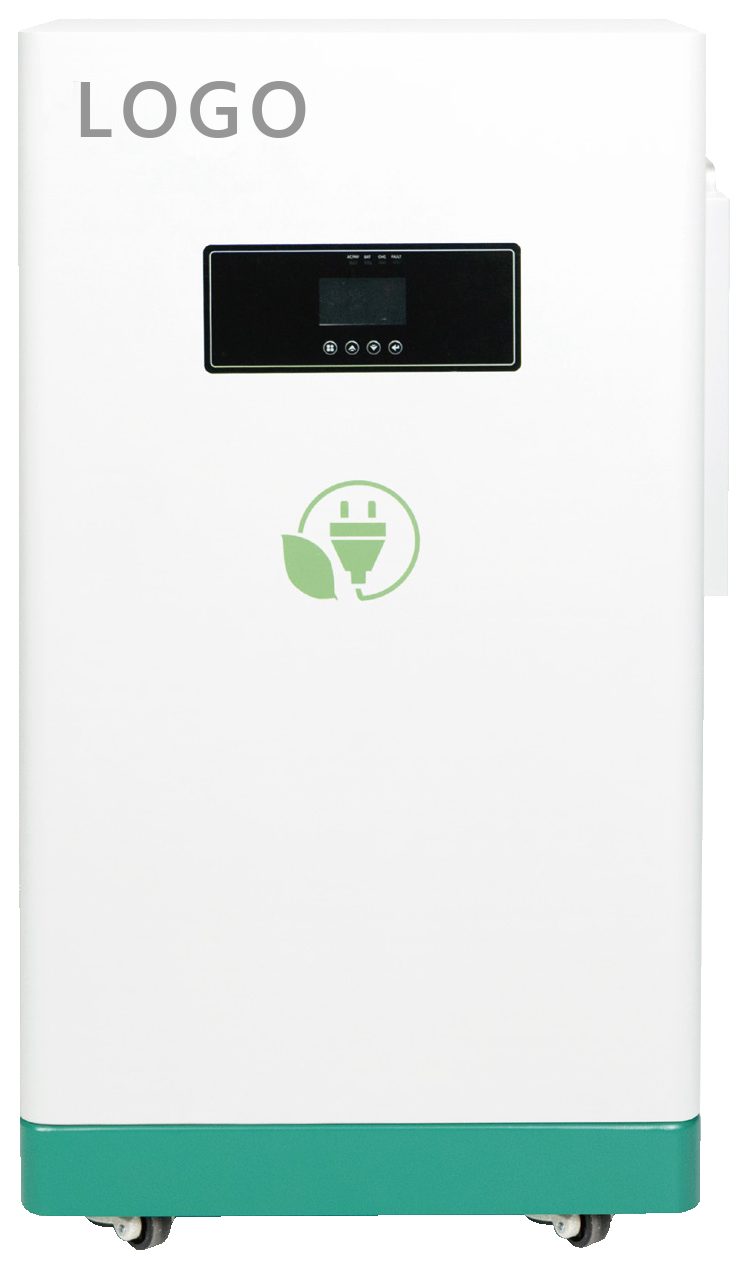
Most battery systems are bought twice: once at the size someone recommended, and again at the size that actually covers the load. The first purchase is usually too small, and it is too small for a predictable reason — the load list was never written down.
This guide is the arithmetic, in order, with a worked example. It uses the same method we apply to a customer's load list, and the numbers are the ones a household can read off its own appliances rather than figures from a brochure.
Grenkago is a supplier and exporter of solar inverters and LiFePO4 energy-storage systems based in China. We are not a manufacturer, and we make no claim about production facilities. The method below is arithmetic, not a product claim — the model references at the end are the units in our range whose capacity matches each result.
Step 1 — Write the load list, with hours rather than labels
The list is the whole exercise. Everything after this is multiplication.
Three columns are enough: what the load is, its running watts, and how many hours per day it runs while you need backup. The third column is where most lists go wrong, because the honest answer for a fridge is not "24" and not "0" — it is a duty cycle.
| Load | Running watts | Hours on backup | Notes on the number |
|---|---|---|---|
| Refrigerator | 180 | 12 | Compressor cycles, roughly 30-40% duty, so 12 h of connection ≈ 4.5 h of running |
| Chest freezer | 200 | 12 | Similar duty cycle; a full freezer holds temperature longer than an empty one |
| LED lighting, 8 points | 80 | 5 | Evening hours only |
| Television | 100 | 4 | |
| Router and ONT | 15 | 12 | Continuous, and easy to forget |
| Alarm, gate motor, cameras | 20 | 12 | Mostly standby draw; the gate motor's surge is separate |
| Phone and laptop charging | 30 | 2 |
Two habits make this table trustworthy. Measure rather than read the label — a plug-in energy meter costs very little and replaces every estimate in the running-watts column with a real figure. And list the loads you are willing to lose, separately, because that second list is what keeps the system affordable.
Step 2 — Convert to DC energy, not AC energy
The battery stores DC. The loads consume AC. The gap between them is inverter efficiency plus the inverter's own standby draw, and both are routinely omitted.
AC energy needed = Σ (watts × hours on backup)
For the table above:
- Refrigerator: 180 × 12 × 0.35 duty = 756 Wh
- Chest freezer: 200 × 12 × 0.30 duty = 720 Wh
- Lighting: 80 × 5 = 400 Wh
- Television: 100 × 4 = 400 Wh
- Router: 15 × 12 = 180 Wh
- Alarm and gate: 20 × 12 = 240 Wh
- Charging: 30 × 2 = 60 Wh
Total AC energy = 2,756 Wh, or about 2.76 kWh.
Now convert to DC. At 92% inverter efficiency:
2,756 ÷ 0.92 = 2,996 Wh
Add the inverter's own consumption while it is running — a typical all-in-one draws in the region of 25-40 W continuously, so at 30 W over 12 hours:
2,996 + 360 = 3,356 Wh ≈ 3.36 kWh of DC energy required.
That is the honest number, and it is already 22% larger than the AC figure. Skipping this step is how a system ends up "designed for 2.7 kWh" and failing at 2.5.
Step 3 — Divide by usable depth of discharge
A lithium pack is not emptied to zero, and the capacity printed on the datasheet is nominal, not usable. Our LiFePO4 units are rated at 6,000 cycles or more to 80% capacity retention at 25 °C, 0.5C and 80% depth of discharge — so 80% is the figure to design against, not 100%.
3,356 ÷ 0.80 = 4,195 Wh ≈ 4.2 kWh nominal capacity.
So a household with that load list needs a pack of roughly 4.2 kWh to cover twelve hours. The nearest unit in our range is the H3-W8-6500 at 8 kWh — and the jump from 4.2 to 8 is not waste, for three reasons worth stating explicitly:
- Ageing. The capacity figure is at beginning of life. Designing to 100% of the requirement leaves nothing for the tenth year.
- Cold and heat. Capacity and internal resistance both move with temperature; a pack sized exactly at 25 °C has no margin at either end.
- The load list is a guess the first time. It gets better after a month of measurement, and margin absorbs the correction without a second purchase.
Step 4 — Check the power, not just the energy
Capacity answers "for how long". The inverter rating answers "how much at once". These fail independently, and a system can be perfectly sized on kWh while tripping on start-up surge.
Peak simultaneous load from the table is about 625 W (everything running at the same instant, which rarely happens). Add the compressor start surge: a fridge or freezer motor can draw three to five times its running current for a fraction of a second, so the two compressors starting together could present somewhere between 1.4 and 1.9 kW briefly.
Against that, the H3-W8-6500 provides 5,000 W of AC output, and the H3-W2-4200 provides 3,600 W. Either covers this load list on power by a comfortable margin. The capacity figure, not the power figure, is what decides the purchase here — but check both, because the reverse situation (small battery, big motor) is common in workshops and farms.
The load that breaks the arithmetic: a 3 kW geyser running for one hour is 3 kWh of energy and 3 kW of power at once. It is larger than this entire household's backup requirement in both dimensions. Put it on a non-backup circuit, or accept a system roughly twice the size.
Step 5 — Size the recharge, or the battery is a one-shot
A battery that covers one outage and never refills is a consumable. The recharge calculation is short and it is the step most often skipped.
The energy to replace is the DC energy drawn, adjusted for round-trip losses. At 92% round-trip:
3,356 ÷ 0.92 = 3,648 Wh to put back each day.
Divide by peak sun hours and a system derating of about 0.75 to 0.8 (array soiling, temperature, wiring, MPPT efficiency):
3,648 ÷ (4.5 × 0.78) ≈ 1,039 Wp
So roughly 1 kWp of array refills the battery, before it covers any daytime load. A 2-3 kWp array is the practical figure once daytime consumption is included, and both the H3-W8-6500 (5,000 W PV input) and the H3-W2-4200 (5,000 W PV input) accept considerably more than that — which matters if the array is to be enlarged later without replacing the unit.
Peak sun hours are location-specific and seasonal. Southern African sites commonly plan on roughly 4.5 to 5.5 kWh/m²/day annual average, with winter figures lower. Use the winter number for a system that must work year-round, and check the local figure rather than borrowing one from another country.
The complete worked example
Putting the five steps in one place, for a household on a schedule with about four hours of outage per day, split across the evening:
| Step | Calculation | Result |
|---|---|---|
| 1 | Load list: seven loads, duty cycles applied | 2,756 Wh AC |
| 2 | ÷ 0.92 inverter efficiency, + 30 W standby × 12 h | 3,356 Wh DC |
| 3 | ÷ 0.80 depth of discharge | 4.2 kWh nominal |
| 4 | Peak 625 W running, ~1.9 kW with compressor surge | 3,600 W output is sufficient |
| 5 | 3,648 Wh ÷ (4.5 sun hours × 0.78) | ~1 kWp minimum, 2-3 kWp practical |
The answer is an 8 kWh unit with a 2-3 kWp array. That result is unremarkable, which is the point: the sizing method converges on the same class of product for most households, and the value of doing it properly is knowing why that class is right, and where your own case departs from it.
Where the method goes wrong
Four errors account for most undersized systems.
Using nameplate watts as running watts. A pump rated at 750 W does not draw 750 W continuously, and a fridge rated at 180 W does not draw 180 W for every hour it is plugged in. Duty cycle and actual measurement matter more than any label.
Treating the fridge as a continuous load. Twelve hours of connection is not twelve hours of running. Overstating this inflates the answer; understating the surge trips the inverter. Both come from skipping the meter.
Ignoring inverter standby. Thirty watts for twelve hours is 360 Wh — more than the lighting circuit in this example. It is invisible on a datasheet and visible on a bill.
Sizing the battery and forgetting the array. The most common field failure is a correctly sized pack with no way to refill it during a multi-day outage pattern. If the array cannot replace the daily draw, the system works for one day and then behaves like a smaller system.
Matching a result to a unit
Our all-in-one range, with the capacity each model carries and the case it suits:
| Result from the method | Unit | Capacity and output | Install |
|---|---|---|---|
| 2-3 kWh | H3-W2-4200 | 2.56 kWh, 3,600 W | Outdoor, IP54, 31.7 kg |
| 5-10 kWh | H3-W8-6500 | 8 kWh, 5,000 W | Outdoor, IP54 |
| 10-16 kWh | H3-W16-7200 | 16 kWh at 51.2 V, 6,500 W | Outdoor, IP54, 133.4 kg |
| 5-10 kWh, indoor | H4-N8-4200 | 8 kWh class | Indoor, IP21 |
One detail in that table is worth a paragraph, because it explains a specification buyers find arbitrary. The 8 kWh unit runs a 25.6 V pack; the 16 kWh unit runs 51.2 V. Battery voltage follows module count — sixteen 3.2 V modules in series gives 51.2 V, eight gives 25.6 V. At the same output power, the higher voltage needs half the current: 6,500 W is about 127 A at 51.2 V and about 254 A at 25.6 V. Lower current means smaller cables, less resistive loss and less heat, which is why the larger unit in a range moves to a higher pack voltage instead of simply paralleling more cells.
If you are combining units in parallel for a larger site, match pack voltage across the parallel set, and confirm the parallel limit for the model — our hybrid inverter range scales to 99 kW for commercial installations, but the scaling rule is per model, not per range.
How to get a sized proposal
Send the load list — appliance, running watts if known, hours required — plus the outage pattern you want to cover and the peak sun hours for the site. We will run the five steps against it and reply with a capacity, an array size and the unit that matches, or tell you that the load list is outside what a single unit can cover.
Contact us · Energy storage range · How to size a solar inverter
Frequently Asked Questions
How many kWh do I need for load shedding?
Work it out from the load list, not from a rule of thumb. Total the watts of everything that must run at the same time, multiply by the hours you need to cover, divide by inverter efficiency and by usable depth of discharge. A household running fridge, freezer, lights, television, router and alarm through a twelve-hour evening comes to roughly 4 kWh of nominal capacity, which is why an 8 kWh unit is the usual answer rather than the smallest one available.
Should I size for the longest outage or the typical one?
Size for the typical schedule plus a margin, and decide separately what you want to happen in an extreme event. Sizing for the worst week of the year means buying capacity that sits idle the rest of it; sizing for the typical schedule and accepting that a very long outage ends in a controlled shutdown is usually the better trade. Write down which of the two you are choosing.
Why does battery voltage matter for sizing?
Because the same output power needs more current at lower voltage, and current is what sets cable size, heat and losses. A 6,500 W output draws about 127 A from a 51.2 V pack and about 254 A from a 25.6 V pack. That is why the larger all-in-one units in a range move to a higher pack voltage rather than simply adding cells in parallel.
Can one battery unit cover a geyser or an air conditioner?
Usually not, and trying is the most expensive mistake in this category. A 3 kW geyser running for an hour is more energy than a typical essential-load night. Either size the system for it — which pushes you into a much larger class — or put it on a non-backup circuit so it drops out during an outage and comes back when the grid does.
How much solar do I need to recharge the battery?
Divide the daily DC energy you need to replace by the peak sun hours for your location and by an 0.75-0.8 system derating. A site needing 3.3 kWh of DC energy with 4.5 peak sun hours needs about 0.9 kWp just to refill the battery, before it covers daytime loads. Check that figure against the inverter's stated PV input limit before assuming it fits.
Conclusion
Sizing is five multiplications and one honest list. The list is the hard part, and it is hard because it requires measuring rather than estimating — but once it exists, the capacity is not a matter of opinion.
The number that most often changes a purchase decision is not the kWh figure at all. It is the recognition that a geyser or an air conditioner belongs on a different circuit, which turns a system that looked unaffordable into one that fits the original budget.