
Diesel Generator vs Solar + Storage: The 3-5 Year Payback Explained
One line: A diesel generator is cheap to buy and expensive to run; a solar plus storage system is the reverse. The payback falls out of one number, the generator hours you actually intend to eliminate, and for a site running a machine most days it usually lands within three to five years.
Diesel in the markets where generator replacement is being decided runs at roughly USD 0.80-1.20 per litre in 2026, and a solar plus storage system that displaces generator hours typically pays for itself in three to five years (source: IndexBox, 2026). Those two figures are the whole argument, and the rest of this article is about making sure the comparison is run honestly rather than in the seller's favour.
Grenkago is a supplier and exporter of solar inverters and LiFePO4 energy-storage systems based in China. We are not a manufacturer, and we make no claim about production facilities. We do not sell generators, so we have no interest in defending either column, and the arithmetic below is set out for a buyer to run on their own numbers.
Why this comparison matters now
Africa's residential storage market is forecast to grow from USD 1.2-1.6 billion in 2026 to USD 5.5-7.5 billion by 2035, a compound annual growth rate of 16-20% (source: Boin Group industry round-up, 2026). Around 600 million people on the continent have no electricity supply at all (source: World Bank, 2026), and Nigeria's grid reaches 61.2% of the population, leaving roughly 80 million people to run their homes on generators, inverters or nothing (source: IndexBox, 2026).
That is the market where the generator has been the default answer for decades. What changed is that the alternative now exists at a price where a site owner can compute a crossover date rather than take a leap of faith. In parallel, the hybrid inverter category has grown from USD 11.78 billion in 2026 toward USD 26.67 billion by 2035, a compound annual growth rate of 9.4%, and off-grid and hybrid are the fastest-growing end applications in the inverter market (source: Research Nester, 2025; Emergen Research, 2026-2035).
Three costs a generator hides in the running
The purchase price of a generator is visible and the rest is not, which is why the comparison so often starts wrong. Three costs continue for the life of the machine:
- Fuel per running hour. The figure that decides everything. A generator carrying a household or a small business can burn litres every hour it runs, and the fuel price is set by markets the site owner cannot influence.
- Servicing and consumables. Oil, filters, belts and a service schedule measured in run-hours. Skip them and the machine fails early; keep them and the cost lands every year without exception.
- The rebuild cycle. A generator has a service life measured in thousands of hours, after which the engine needs an overhaul or replacement. A site running its machine six hours a day reaches that threshold far sooner than its owner expects, and the second machine costs what the first one did.
There is a fourth, quieter cost: downtime. A generator that will not start, or fails under load, is an outage in exactly the moment the site needed supply.
Three costs a solar system front-loads
The solar plus storage column inverts the shape of the spend:
- Equipment, paid once. Panels, hybrid inverter and battery are bought at the start. There is no fuel invoice attached to the system afterwards.
- Installation and mounting. Roof or ground mount, cabling, protection and commissioning - a one-time project cost, and one that a site that already has panels can partly write off.
- Replacement, once, a decade out. A LiFePO4 bank rated at 6000 cycles to 80% capacity at 25 degrees Celsius, 0.5C and 80% depth of discharge is a one-bank purchase for ten-plus years of daily cycling, against two to four deep-cycle lead-acid replacements in the same period.
What the solar column does not carry is a recurring fuel line, and that is the asymmetry the payback is built on.
Running the arithmetic
The comparison resolves into one table, and the numbers in the right-hand column are the ones to fill in from your own site:
| Line | Diesel generator | Solar plus storage |
|---|---|---|
| Purchase cost | lower up front | higher up front |
| Fuel | every running hour, all life of machine | none |
| Servicing | oil, filters, belts on a run-hour schedule | none on the storage; occasional panel cleaning |
| Engine overhaul | at the end of the service life, then a second machine | not applicable |
| Noise and exhaust | continuous while running | none while running |
| Runtime during a grid failure | as long as fuel and servicing hold out | limited by stored kWh, extendable with more battery |
| Daily running cost after installation | unchanged | close to zero |
To get your own payback date, three inputs are enough:
- Generator run-hours per day that you intend to eliminate - not the hours you currently own, the hours you plan to stop running.
- Fuel cost per hour, from your machine's consumption at its usual load and your local price per litre. At USD 0.80-1.20 per litre, a machine burning a few litres an hour produces a daily fuel figure that is worth calculating carefully (source: IndexBox, 2026).
- Installed cost of the solar plus storage system, including mounting and commissioning.
Divide the installed cost by the annual fuel and servicing figure and you have the payback in years. For a site running a machine most days, published market figures put the result at three to five years (source: IndexBox, 2026). A site that runs a generator two hours a week is a different case, and we say so below.
What moves the answer
| Condition | Effect on payback | What to do |
|---|---|---|
| Generator runs daily, several hours | shortest payback | size the battery to the daily run-hours, array to refill it |
| Generator runs a few hours a week | long or no payback | keep the generator; solar is a comfort purchase, not a financial one |
| Load list includes heavy motors | needs surge headroom | choose a unit with 2-3 times rated surge, and check the pump or compressor start |
| Site has no grid at all | fuel is the only alternative | the comparison is generator versus solar, and fuel sets the baseline |
| Site has an unreliable grid | generator is used as top-up | hybrid unit takes PV, grid and battery, generator becomes standby |
| Loads include air conditioning or a geyser | battery drains fast | separate critical and non-critical loads so the battery carries essentials to morning |
Sizing a replacement
Work backwards from fuel rather than forwards from the product list. A site burning a few litres an hour for several hours has a daily energy figure; that figure, in kWh, is the usable battery capacity the system has to deliver overnight, and the array is then sized to refill it during the day.
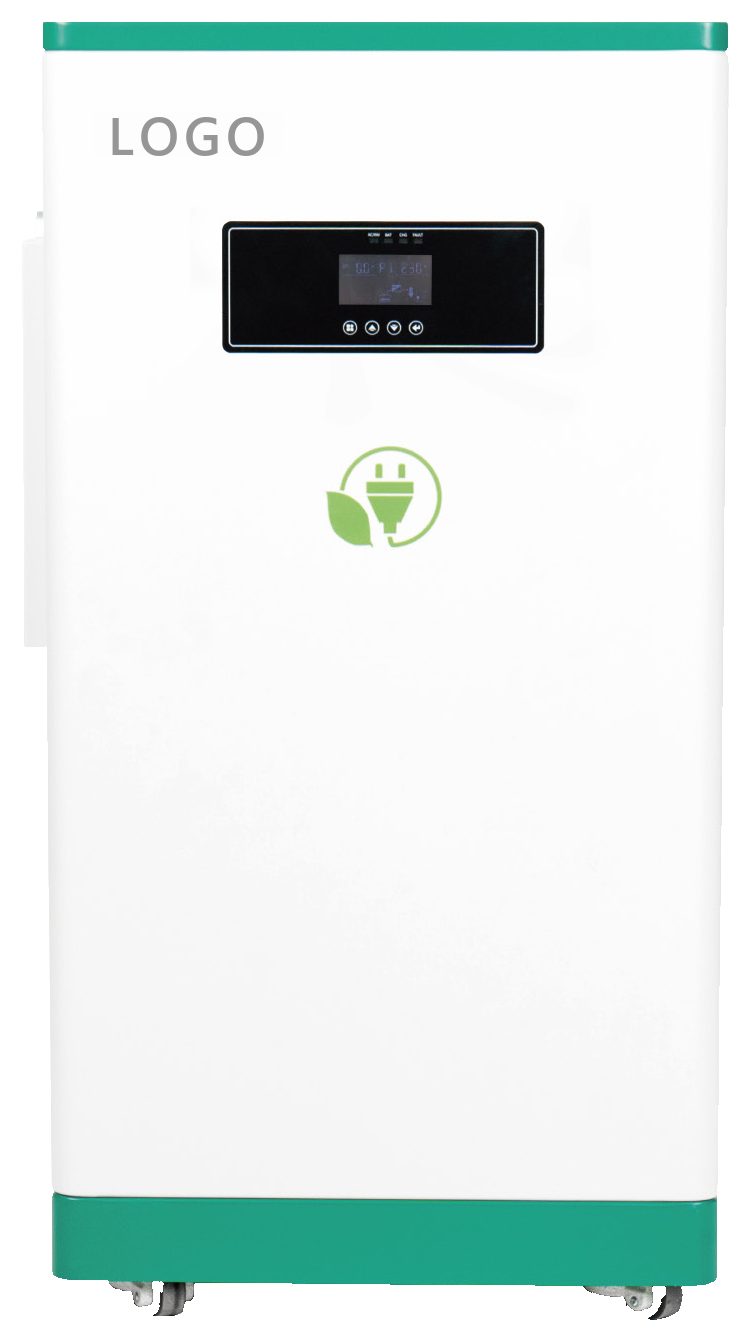
For reference, our all-in-one range runs from a 300 W portable unit to a 16 kWh outdoor wall unit, and the hybrid inverter range covers 1.2 kW to 11 kW per unit with parallel scaling to 99 kW. For a site where the generator carries a workshop or a clinic rather than a home, the parallel path matters, because it means the system grows by adding units rather than by replacing the platform. See the commercial and workshop backup note for the load-separation approach on that scale.
The sizing guide sets out the same method with worked examples, and the installation guide covers stringing, protection and battery connection.
When the generator is still the right answer
Two cases where we would not push a replacement:
- A standby machine that rarely runs. If the generator is insurance against a rare event rather than a daily supply, it has not accumulated enough run-hours for the fuel arithmetic to favour anything. The lower purchase price is real money saved, and a battery bought for a few hours a year will not repay itself.
- A site whose peak load the battery cannot cover. A battery must be sized to the load it is asked to carry overnight; a system that is undersized will still run the generator, just less often, and the payback stretches accordingly. Size the storage to the load, not to the budget.
In both cases a hybrid unit can still earn its place by taking over daytime load and grid charging, leaving the generator for the peaks only - which is a different and smaller project than full replacement.
How to get a quotation
Send us five things and we return a sized proposal with the model, the battery capacity and the array plan:
- Generator run-hours per day and litres per hour, or the fuel spend per month
- Load list: appliances, wattage, and which must survive an outage
- Site location and whether the installation is indoor or outdoor
- Whether solar panels or an inverter are already installed
- Any three-phase equipment on site
Write to hello@grenkago.com or use the contact page. A request that carries the fuel figures gets a sized answer with a payback estimate rather than a catalogue.
Frequently Asked Questions
Is solar plus storage cheaper than running a diesel generator?
For a site that runs a generator most days, yes, and the crossover usually lands within three to five years. The generator's purchase price is only part of its cost: fuel, servicing, lubricant and the rebuild cycle continue for the whole life of the machine, while the solar system's cost is almost entirely up front.
How do I calculate the payback for my own site?
Multiply daily generator run-hours by fuel consumption per hour and by your local fuel price to get the daily fuel cost, then add servicing over the period. Divide the installed cost of the solar plus storage system by that annual figure. Generator hours you plan to eliminate, not generator hours you own, is the number that matters.
What size solar system replaces a generator?
Match the battery's daily usable kWh to the generator fuel you currently burn, then size the array to refill that battery in a day. Our all-in-one units run from 2.56 kWh to 16 kWh, and the hybrid inverter range covers 1.2 kW to 11 kW per unit with parallel scaling to 99 kW for commercial sites.
Can I keep the generator as backup?
Yes, and it is often the sensible plan. A hybrid system can run the site in normal operation and leave the generator as a rarely used standby, which cuts run-hours enough to extend the machine's service life considerably. Fuel consumption, not purchase cost, is what shortens a generator's economic life.
What maintenance does the solar side need?
Very little. A LiFePO4 bank in normal service needs no watering or terminal service, an internal BMS handles cell balancing and protection, and the panel array needs occasional cleaning. The contrast with a generator, which needs oil, filters and a service schedule, is most of the operating-cost difference.
Conclusion
The generator and the solar system differ less in what they cost than in when they cost it. A generator charges the site a fuel bill every day and a rebuild bill at the end; a solar plus storage system takes the whole cost up front and then runs on sunlight. For a site where the machine runs most days, that trade pays back in three to five years, and every year after that is fuel the site no longer buys. Grenkago supplies the inverters and LiFePO4 storage that make up that side of the comparison, from a 300 W portable unit to a 16 kWh wall unit and parallel systems up to 99 kW. See the energy storage range or send us your fuel figures and we will run the arithmetic with you.