
What a CE or RoHS Certificate Actually Covers — and What It Doesn't
One line: A compliance certificate is not a badge that covers everything a supplier sells; it is four fields on one page — who holds it, which models it names, which directive version it was tested against, and when it expires. Almost every compliance dispute between a buyer and a supplier comes down to one of those four fields.
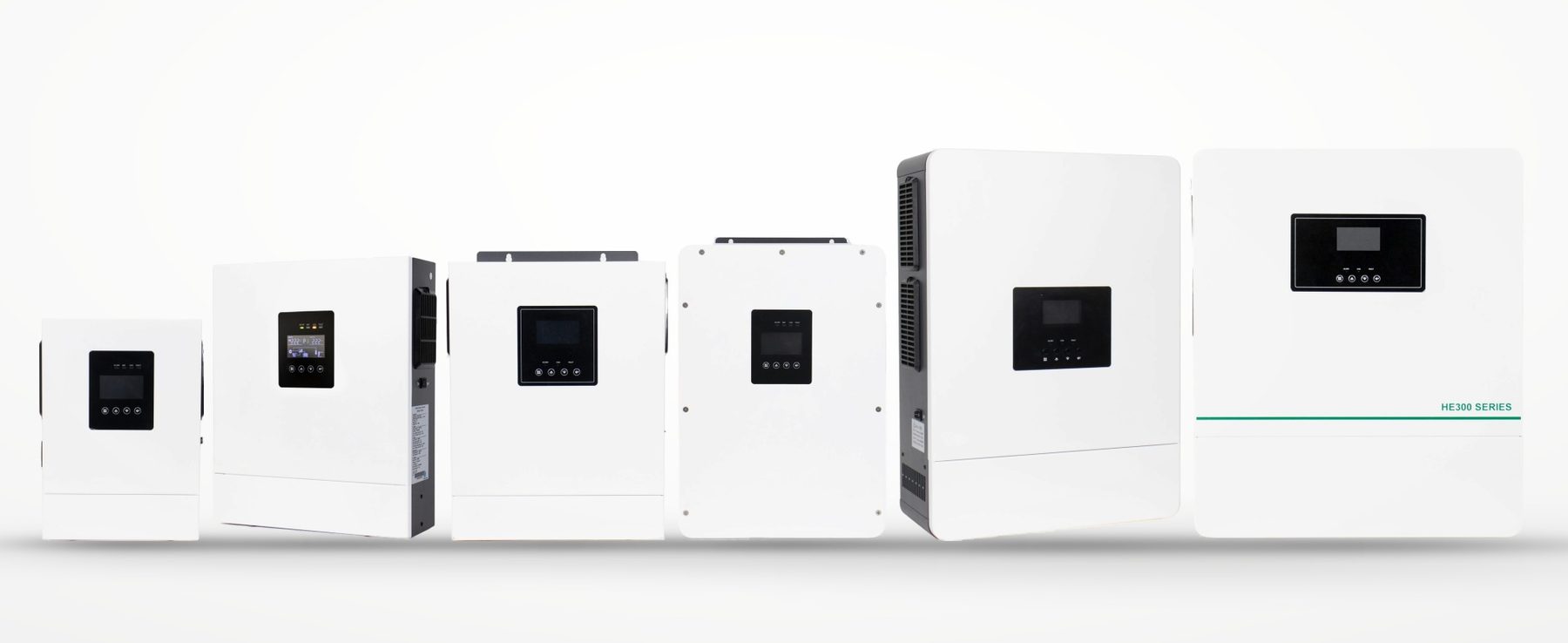
A buyer asks for "the CE certificate", receives a PDF with a red logo on it, files it, and quotes the product as CE certified. Six months later a marketplace takes the listing down, or a customs broker asks for a Declaration of Conformity that nobody can produce. The certificate was real. It simply did not say what everyone assumed it said.
This guide is about reading the document rather than trusting the badge. It is written from the paperwork we hold ourselves, including the places where our own files stop short — because a guide on certificate scope that only describes other people's mistakes would be worth very little.
Grenkago is a supplier and exporter of solar inverters and LiFePO4 energy-storage systems based in China. We are not a manufacturer, and we make no claim about production facilities. The certificate files described below are held by the certificate holder named on each document, and we publish the certificate number, the covered model list and the expiry date for every one of them.
A certificate is four fields, not a badge
Every compliance document that matters to a purchase decision carries the same four pieces of information. If any one of them is missing, the document cannot be used to support a claim.
| Field | What it fixes | What goes wrong when it is ignored |
|---|---|---|
| Holder | The legal entity the document was issued to | A certificate held by a third party is quoted as if the supplier held it |
| Model list | The exact model codes covered | A series name is assumed to cover every variant inside it |
| Directive and standard version | Which edition of the requirement was applied | An older edition is quoted against a newer market requirement |
| Validity | Issue date, expiry date, or "valid while the standard is current" | An expired or superseded document is presented as current |
The holder field is the one buyers skip most often, and it is the one that decides whether the document is usable at all. A test certificate issued to a factory is evidence about a factory's samples. It does not automatically travel with the brand that sells the product, and it certainly does not travel with a distributor who buys from that brand. When a document is passed along a supply chain, what the buyer actually needs is a declaration from the party they are buying from, referencing the underlying test evidence.
That distinction is why the phrase "certificate holder named on the document" matters more than it looks. It is the difference between "this product has been tested" and "the party selling me this product is standing behind the test result".
What "CE" actually is — and why "CE certificate" is not a legal term
This is the single most common misunderstanding in the category, and it is not the buyer's fault: the market uses the phrase "CE certificate" so consistently that it sounds like an official document class. In EU law it is not one.
CE marking works through a declaration. The party placing the product on the market — the manufacturer, or an importer established in the EU — draws up an EU Declaration of Conformity, states which directives apply, keeps a technical file, and affixes the mark. For a low-voltage inverter the applicable directives are normally:
- Low Voltage Directive 2014/35/EU — applies to equipment rated between 50 and 1,000 V AC, or 75 and 1,500 V DC.
- EMC Directive 2014/30/EU — electromagnetic compatibility.
- RoHS Directive 2011/65/EU, as amended by (EU) 2015/863 — restricted substances.
For most inverters in this class there is no notified body involvement, which is exactly why no notified body issues a "CE certificate" for one. What exists in the market is a voluntary attestation from a testing laboratory, stating that the sample was assessed against the relevant standards — for inverters typically EN 62109-1 and EN 62109-2 for safety, EN 61000 series for EMC, and EN 50549-1 where grid connection behaviour is in scope.
That attestation is genuinely useful. It is independent evidence, it names the standards, and it gives a buyer something concrete to check. But it is not the legal instrument. The legal instrument is the Declaration of Conformity, and those are two different pages.
One of our own files makes this visible in unusually plain language. The UDEM attestation covering the HE200 and HE500 ranges states on its face that it does not replace an EC Declaration of Conformity. That sentence is worth more than the certificate number: it tells a European buyer precisely what is and is not in the envelope, before they get to customs.
What this means in practice: if a marketplace or a customs broker asks for a DoC, asking your supplier for "the CE certificate" will not produce one. Ask for the Declaration of Conformity by name, and ask which entity will sign it.
What RoHS covers — ten substances and one basis you have to get right
RoHS is the area where a certificate looks most complete and covers least. The directive restricts ten substances, and the threshold applies not to the product as a whole but to each homogeneous material inside it.
| # | Substance | Limit |
|---|---|---|
| 1 | Lead (Pb) | 0.1 % |
| 2 | Mercury (Hg) | 0.1 % |
| 3 | Cadmium (Cd) | 0.01 % |
| 4 | Hexavalent chromium (Cr VI) | 0.1 % |
| 5 | Polybrominated biphenyls (PBB) | 0.1 % |
| 6 | Polybrominated diphenyl ethers (PBDE) | 0.1 % |
| 7 | Bis(2-ethylhexyl) phthalate (DEHP) | 0.1 % |
| 8 | Butyl benzyl phthalate (BBP) | 0.1 % |
| 9 | Dibutyl phthalate (DBP) | 0.1 % |
| 10 | Diisobutyl phthalate (DIBP) | 0.1 % |
Two details in that table are load-bearing. Cadmium sits at a tenth of the others, so a material that passes nine substances comfortably can still fail on that one line. And "homogeneous material" means a coating, a solder joint, a plastic housing and a cable jacket are each assessed separately — a compliant assembly can contain a non-compliant screw plating, and the certificate would not survive that.
There are also exemptions under Annex III and Annex IV of the directive, covering specific applications such as certain lead alloys and high-melting-temperature solders. An exemption is not a loophole being exploited; it is a listed, dated allowance. But it does mean that "RoHS compliant" and "contains zero restricted substances" are different statements, and only the first one is what a certificate supports.
Three misreadings that cost buyers money
The series name is not the model list
A certificate that names HE200-2500-O and HE200-7200-FP does not cover "the HE200 series". It covers the models printed on it. Series naming is a marketing convenience that suppliers and buyers both use, and it becomes a liability the moment a marketplace checks the model code on the nameplate against the certificate.
Our own CE file for the HE200 and HE500 ranges lists fourteen models. It is easy to read the series heading and assume the range is complete; it is not.
The IP variant is a separate case
This is the misreading we see most, and again one of our own documents illustrates it. The EMC certificate covering the HE300 range lists HE300-7200-FP — and does not list HE300-7200-FP-I5, its IP54 variant.
Nothing is wrong with the document. Sealing the enclosure changes the construction, the thermal path and the internal layout, so it becomes a different case for assessment purposes. But a buyer who quotes CE coverage for the IP54 version on the strength of the base model's certificate has made a claim the paperwork does not support — and on a tender or a marketplace listing, that is the kind of error that surfaces at the worst possible moment.
The rule generalises: the model code on the nameplate has to match the certificate list character for character, including suffixes.
A test report speaks for the samples it tested
A test report and a certificate are not the same thing, even when they carry the same date and the same laboratory logo.
A report documents what happened to a specific set of samples on specific days, under stated conditions, at stated results. A certificate states coverage for a declared model list. Reports also carry a shelf life that is not printed on them: a report from 2023 is not automatically evidence about a unit built in 2026, because components and suppliers change.
When a supplier sends a report where a certificate is expected, the useful question is not "does this prove compliance" but "which samples does this describe, and does the model I am ordering appear in that description".
How to check a certificate in five steps
This takes about ten minutes and catches most of what matters.
- Read the holder line first. Is the named entity the one you are buying from, or a third party? If it is a third party, ask for the declaration that connects them to your order.
- Find the model list. Compare it against the exact model code you intend to order, including any suffix. If your model is not on the list, stop here — nothing further in the document applies to your claim.
- Read the directive and standard versions. A certificate citing an older edition of a standard may still be valid for its date, but it may not satisfy a current market requirement. Check what the destination market currently requires.
- Check the dates. Issue date, expiry date, and whether the document is described as valid only while a standard remains current.
- Check the issuer. The certificate names the issuing body and usually its accreditation. If you cannot find the issuing body, that is a finding in itself.
Two practical notes on the mechanics. Ask for the PDF, not a screenshot — a screenshot removes the page numbering, the signature block and often the model list on a later page. And ask what the document's status is today, not what it was when it was scanned: renewals, suspensions and standard revisions all happen silently.
Six questions to put to any supplier
These are the questions that separate a supplier working from documents from one working from memory. They are worth asking in writing, because a written answer is checkable.
- Which certificate covers the exact model I am ordering, and can you send that page?
- Who is the certificate holder, and what is their relationship to the entity invoicing me?
- Does that certificate cover the full model list you are quoting, or only part of it?
- Which directive and standard editions does it cite, and are they the current ones for my market?
- Is there an EU Declaration of Conformity available for this model, and who signs it?
- What is the expiry date, and what happens to the claim after it?
A supplier who can answer all six from documents is easy to work with. A supplier who answers from memory is not being dishonest — most of the industry does it — but the answer is not evidence, and it will not survive a marketplace check.
Where our own paperwork stops
A guide that only described other people's gaps would be misleading, so here are ours, stated as plainly as the documents state them.
Coverage is per model range, and it is not complete across the catalogue. The CE file for the HE200 and HE500 ranges covers fourteen models. A separate EMC certificate covers the HE300, HE310 and HE600 ranges. Between them they do not cover every product we quote, and the certificate list, not the catalogue, is the reference.
RoHS coverage is 23 models. The HE310-5000-F, the battery packs and the all-in-one ESS units are outside that list. We say so on the certificate page rather than describing RoHS as site-wide.
The FCC file is a Supplier's Declaration of Conformity, not a certification. It carries no FCC ID, and we describe it as "FCC Part 15 Subpart B compliant (SDoC)" — because stating an FCC ID that does not exist would be worse than stating none.
No UN38.3 test report is held for the battery models at present. UN38.3 is the requirement for shipping lithium batteries by air or sea. Without it, those models cannot currently be quoted for transport, and we say that rather than working around it.
The UDEM attestation does not replace a Declaration of Conformity. If a European customer needs a DoC for customs or a marketplace listing, it has to be issued separately, and we will state clearly whether it is available for the model in question.
None of that is comfortable to publish. It is, however, the difference between a compliance page and a compliance claim.
How to get the files
If you are working through a purchase, send the exact model codes and the destination market, and we will send back the certificate pages that cover them — or tell you plainly that no document covers that model, which is a faster answer than a wrong one.
Contact us · All certifications · CE file · RoHS file
Frequently Asked Questions
Is there such a thing as a CE certificate?
Not in EU law. CE marking is a declaration by the party placing the product on the market, supported by a Declaration of Conformity and a technical file. A laboratory certificate can be useful supporting evidence, but no notified body issues an official CE certificate for a low-voltage inverter. Anyone who offers you one is describing a voluntary attestation, not a legal document.
What does a RoHS certificate actually prove?
That the samples tested for the listed models, at the time of testing, were below the restricted-substance thresholds. It does not prove that a unit produced two years later is identical, and it does not extend to models that are not named on the document. The ten substances and the homogeneous-material basis are the part buyers most often get wrong.
Why is one IP rating covered and another not?
Because the IP variant is treated as a separate model. On one of our own files, HE300-7200-FP is listed but HE300-7200-FP-I5 is not — the sealed enclosure changes the construction, so it becomes a new case. Always match the exact model code on the nameplate against the certificate list, character by character.
Does an FCC certificate give me an FCC ID?
No. An FCC Supplier's Declaration of Conformity under Part 15 Subpart B is a self-declaration route and carries no FCC ID at all. If a supplier quotes an FCC ID for a product declared under SDoC, either the route is different or the number is not real. Ask which route applies before you put an ID on a listing.
Can I verify a certificate number myself?
Usually, yes. Certificates from accreditation-body laboratories can be checked through the issuing laboratory or the accreditation register, and the certificate itself names the issuing body and its address. Ask for the certificate as a PDF rather than a screenshot, and check the model list on the document against the model code you are ordering.
Conclusion
The useful question is never "do you have CE", because the answer is always yes and it always means something slightly different. The useful question is which document, covering which models, against which directive version, until when — and the answer has to come off a page, not out of a conversation.
Get those four fields right at the quotation stage and most compliance problems never happen. Get them wrong and they surface later, when a listing is suspended or a container is held, at which point the cost is measured in weeks rather than in a re-issued document.